Why Gamers Are Stuck in the Past: My Observations on the Nostalgia Boom in 2026
The powerful nostalgia and retro gaming trend dominate 2026's Twitch, reshaping how we play and watch games with remastered classics and enduring titles like World of Warcraft Classic.
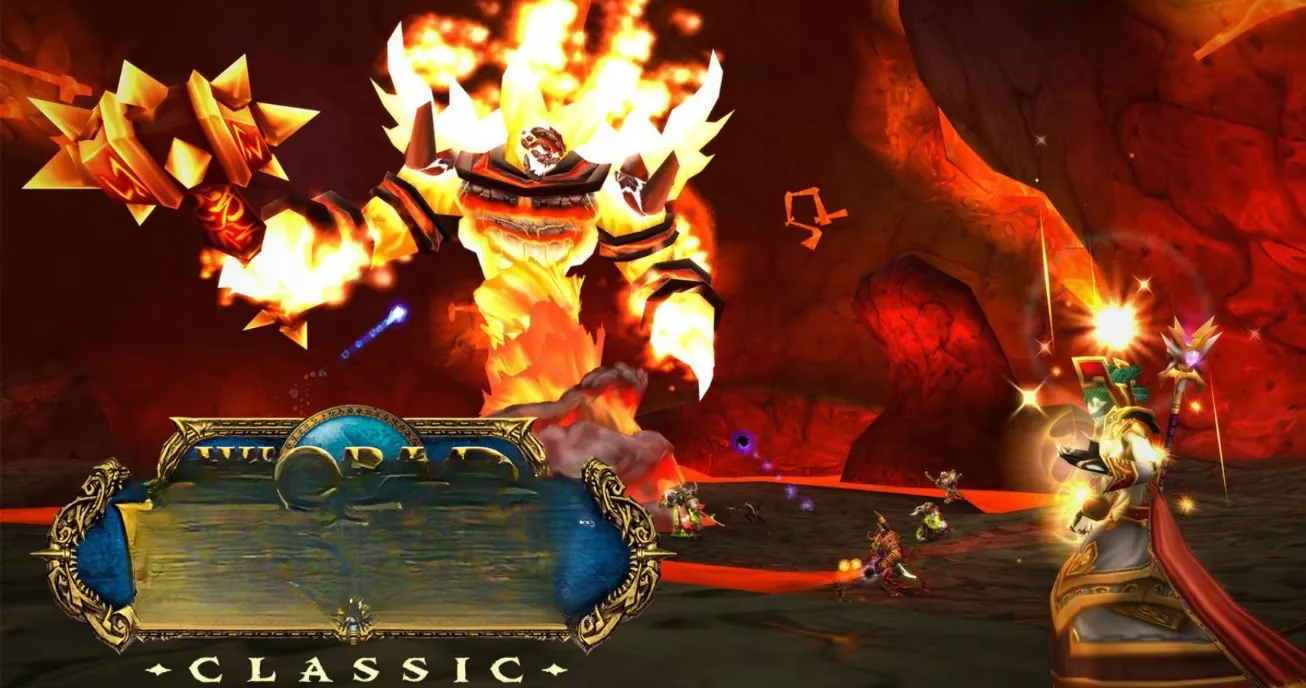
It's 2026, and as I scroll through Twitch, I can't help but notice a familiar sight. The top-viewed streams aren't always the flashy new releases; instead, they're often windows into gaming's past. It's a phenomenon that's only intensified over the years. Back in 2019, when World of Warcraft Classic launched, it shattered viewership records with over a million concurrent viewers, dwarfing even Fortnite at its peak. That moment wasn't a fluke; it was a harbinger. Fast forward to today, and the landscape is still dominated by a powerful sense of nostalgia. We, as a community, seem to find immense comfort and joy in reliving our digital memories, a trend that has fundamentally reshaped how we play and watch games. For me, it's more than just a trend; it's a cultural shift I've lived through.
The evidence is everywhere, not just in viewership numbers. Look at the marketplace. The triumphant returns of remastered classics like Crash Bandicoot and Spyro paved the way. Now, in 2026, we're seeing even more ambitious projects. While Final Fantasy VII Remake was a landmark event earlier this decade, the appetite for revisiting beloved worlds has only grown. It's like we're collectively saying, "Been there, done that, and I wanna do it all over again, but with better graphics." This isn't just about playing; it's about watching, too. The Twitch charts tell a story of enduring love for familiar titles. Back in the day, seeing Grand Theft Auto V and Minecraft consistently pulling in six-figure viewership alongside newer games was a wake-up call. It proved these games had serious staying power.
So, why are we, as gamers, so hesitant to fully embrace the new and shiny? From my perspective, there are a few key reasons that have become even clearer by 2026.
1. The "If It Ain't Broke" Mentality is Stronger Than Ever.
Developers have become masters at the "games-as-a-service" model. Why create a whole new sequel when you can keep updating the current hit? Games like GTA V and Minecraft are living, breathing platforms. They receive constant content updates, seasonal events, and community mods that keep them feeling fresh. This creates a powerful inertia. Players, myself included, have invested hundreds, sometimes thousands, of hours into these ecosystems. The thought of starting from scratch in a GTA VI (which, let's be real, still feels like a myth sometimes) is daunting. We've built our digital lives here. The constant updates are like a security blanket, promising that our time investment won't be wasted. It's a brilliant strategy, but it does make you wonder if we're trading innovation for comfort.
2. Our Brains Are Fried, and We Crave Simplicity.
Let's be honest, the modern world is a non-stop barrage of information. Our attention spans? They've taken a serious hit. Learning a brand-new AAA game in 2026 can feel like a part-time job. The tutorials are lengthy, the mechanics are complex, and the meta-game is a beast to understand. For the casual player or the after-work stream viewer, that's a high barrier to entry. Jumping into a game of Minecraft or watching someone grind in WoW Classic is comforting in its familiarity. The rules are known, the goals are clear. It's a low-stress, high-reward form of entertainment. As the saying goes, "Don't fix what isn't broken." Our overloaded brains wholeheartedly agree.
3. The Power of Shared History and Community.
Gaming is a social experience. The titles dominating Twitch often have communities that are a decade old or more. There's a shared language, inside jokes, and a collective memory. Watching a streamer play WoW Classic isn't just about the gameplay; it's about reliving the shared struggle of the old school grind, the infamous boss fights, and the sense of a massive, persistent world. It's a form of cultural touchstone. New games have to build that from the ground up, while these older titles come with a pre-built, deeply engaged community. It's like hanging out with old friends, even if you're just lurking in a chat.
Here's a quick look at what this nostalgia-driven ecosystem often provides versus a brand-new title:
| Feature | Nostalgic / Evergreen Title (e.g., Minecraft, GTA V) | Brand New AAA Release |
|---|---|---|
| Learning Curve | Low to Moderate (You likely know it) | Steep (New systems to master) |
| Community | Established, massive, and deeply rooted | Growing, potentially fragmented |
| Content Predictability | High (Known gameplay loops) | Low (Uncharted territory) |
| Risk for Player | Low (Known quantity) | High (Might not click) |
| Development Focus | Iterative updates, community support | Building core systems from scratch |
In the end, this trend has its pros and cons. On one hand, it ensures our favorite worlds stay alive and vibrant. The support for these games is incredible. On the other hand, it can sometimes feel like the industry is stuck in a feedback loop, hesitant to take big risks when re-releases and updates are such a safe bet. As a player in 2026, I find myself bouncing between the two. I'll spend a week diving into the latest, most hyped release, only to retreat back to the comforting, familiar streets of Los Santos or the blocky landscapes of my old Minecraft server when I need a digital detox. It's not about rejecting the future; it's about carrying the best parts of our past forward with us. The classic games have proven they've got serious legs, and honestly? I'm here for it. It's a testament to their design that they can still hold their own in a world of ray-traced, hyper-realistic newcomers. That's pretty damn impressive if you ask me. :video_game: :recycle: