The Enduring Legacy of Skyrim and GTA V: A Tale of Two Cash Cows
The enduring video game titans, *The Elder Scrolls V: Skyrim* and *Grand Theft Auto V*, masterfully employ compelling strategies of relentless remasters and expansions, dominating the gaming landscape for over a decade.
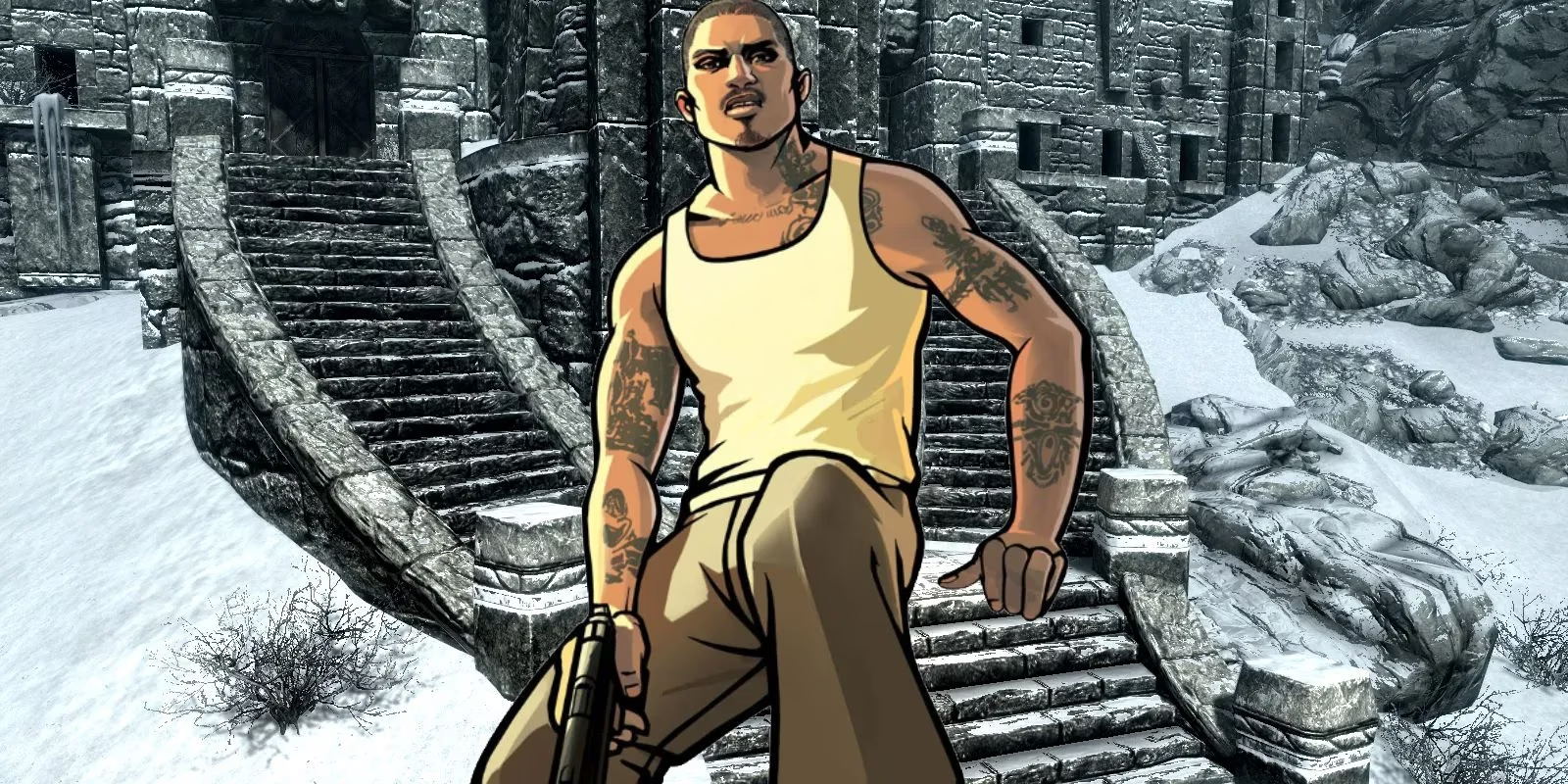
In the ever-evolving landscape of video games, two titans stand defiant against the march of time, stubbornly refusing to step aside for their successors. As of 2026, the specters of The Elder Scrolls V: Skyrim and Grand Theft Auto V continue to haunt storefronts and console libraries, their shadows growing longer with each new hardware generation. Rockstar Games, in a move as transparent as a freshly cleaned window, has been meticulously following the playbook written by Bethesda for Skyrim. This strategy, a masterclass in milking a franchise like a prize dairy cow that just won't run dry, ensures that fans shouldn't hold their breath for brand-new entries on the latest hardware anytime soon. The cycle of remasters, re-releases, and enhanced editions has become a familiar, if slightly wearying, ritual for gamers worldwide.
The Blueprint for Longevity: Bethesda's Endless Scroll
Bethesda's approach to Skyrim has been less like developing a game and more like curating a museum exhibit that keeps finding new, bigger wings to expand into. Originally unleashed upon the world in 2011, the game has undergone more transformations than a shapeshifting dragon. Its journey is a saga in itself:
-
2013: The game was bolstered by three major DLC expansions (Dawnguard, Hearthfire, Dragonborn), later bundled into the Legendary Edition.
-
2016: A full remaster, the Special Edition, arrived for PlayStation 4 and Xbox One.
-
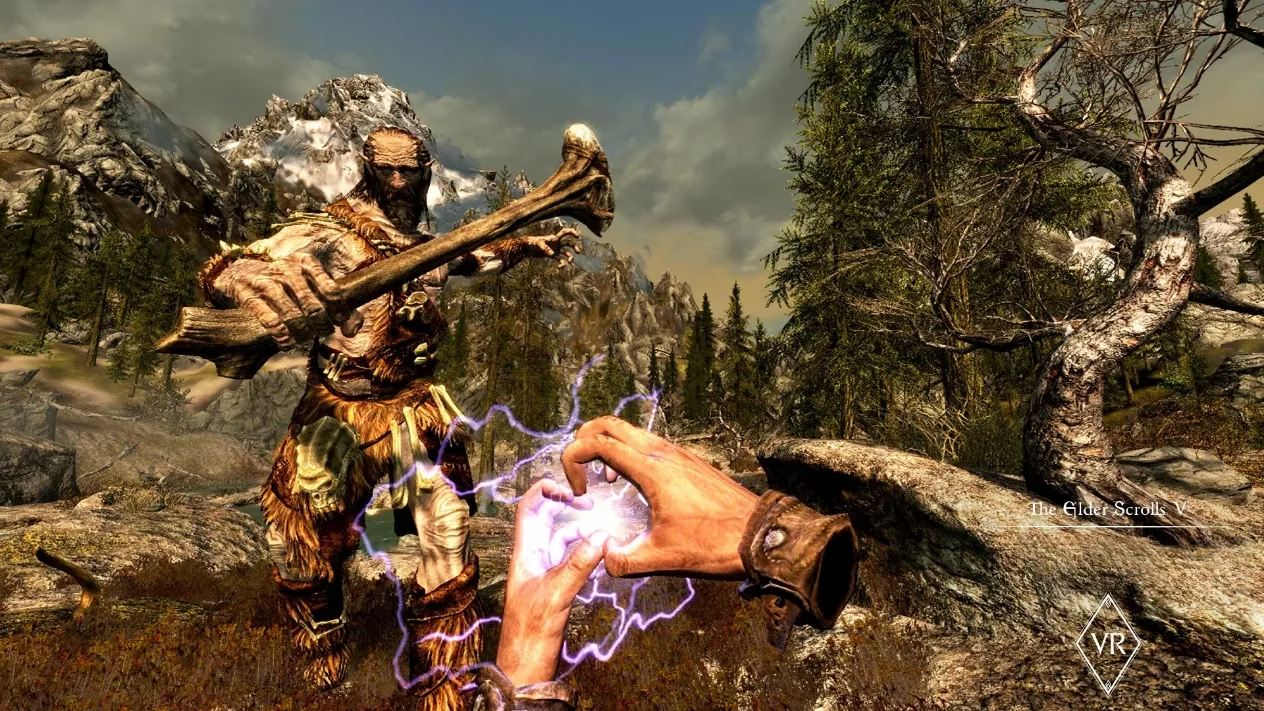
2017: The adventure went portable on Nintendo Switch and immersive on PlayStation VR.
Fast forward to 2026, and while an official Skyrim release for the PlayStation 6 and the rumored next Xbox hasn't been confirmed, the gaming community treats its eventual arrival as an inevitability, like taxes or a new superhero movie. The silence surrounding The Elder Scrolls VI is deafening, with Bethesda maintaining a Sphinx-like secrecy about its development, leaving fans to subsist on rumors and hope.
Rockstar's Grand Heist of the Same Car... Repeatedly
Not to be outdone, Rockstar Games has executed its own long-con with Grand Theft Auto V. If Skyrim' strategy is a curated museum, then GTA V's is a wildly successful Broadway show that just keeps extending its run and moving to bigger theaters. The timeline is just as impressive:
| Release Year | Platform | Notable Feature |
|---|---|---|
| 2013 | PS3, Xbox 360 | Original Release |
| 2014 | PS4, Xbox One | Enhanced Remaster |
| 2022 | PS5, Xbox Series X/S | "Expanded & Enhanced" Edition |
| 2026 | Current Platforms | Ongoing GTA Online Support |
Rockstar didn't just stop at polishing the single-player story. They turned GTA Online into a self-sustaining digital metropolis, a perpetual motion machine of content and microtransactions that has arguably outlasted Skyrim's reign. Promotions have been a key tool, such as offering standalone GTA Online for free on new consoles for limited periods, a move Bethesda never quite matched for Skyrim. This online ecosystem has become as essential to the game's identity as Los Santos itself.
Why Keep Re-Releasing? The Simple Math of Success
The reasoning behind this strategy is as clear as a high-definition texture pack. Both games are cultural phenomena and commercial juggernauts. Re-releasing them is a low-risk, high-reward endeavor. Developing a new Grand Theft Auto or Elder Scrolls is a monumental, years-long undertaking fraught with risk and astronomical cost. Porting an already beloved and proven title to new hardware is, by comparison, like reheating a perfect gourmet meal—it's still delicious and requires far less effort from the chef.
For publishers, it's a brilliant stalling tactic. It keeps the franchise name in the public consciousness, generates steady revenue, and buys precious development time for the true sequels. For players, it's a double-edged sword. On one hand, it offers a chance to experience a classic with modern visual fidelity. On the other, it can feel like being served the same magnificent cake at every birthday party for over a decade, while being told the next cake is still in the oven.
The Future: Glimpses Beyond the Horizon
So, what does 2026 and beyond hold? The chatter about Grand Theft Auto VI has evolved from whispers to a constant dull roar. Rumors now suggest a massive, evolving map potentially spanning multiple iconic locations, but Rockstar's official word remains locked tighter than a high-security facility in the game. With the current focus squarely on maintaining the GTA V and Online behemoth on contemporary platforms, a new numbered entry still feels like a distant beacon.
The situation with The Elder Scrolls VI is even more enigmatic. Bethesda has hinted that its completion is still a distant star in the development galaxy, likely years away. In the meantime, both companies have perfected the art of the "definitive edition," treating their flagship titles less like discrete products and more like living services or evergreen platforms—a strategy as predictable as a NPC's daily routine, yet undeniably effective. The debate rages on: is this constant re-release strategy a respectful preservation of classics, or is it a creative stagnation disguised as fan service? One thing is certain: in the world of gaming, the dragons of Skyrim and the criminals of Los Santos are proving harder to retire than anyone could have imagined.