Los Santos and Blaine County: A Living West Coast Travelogue from GTA V
Grand Theft Auto V's archived Rockstar update spotlights Los Santos and Blaine County—a decadent West Coast of cars, commerce, and danger.
Even by 2026, the original Rockstar update felt less like marketing and more like a time capsule. Marcus, a veteran player, had stumbled upon the archived Grand Theft Auto V site update one rainy afternoon. The page still glowed with screenshots, artwork, and an interactive travelogue. It was the same material that had once introduced millions to Los Santos and Blaine County, and it still told a vivid story. The setting was not just a map. It was a decadent West Coast with teeth.
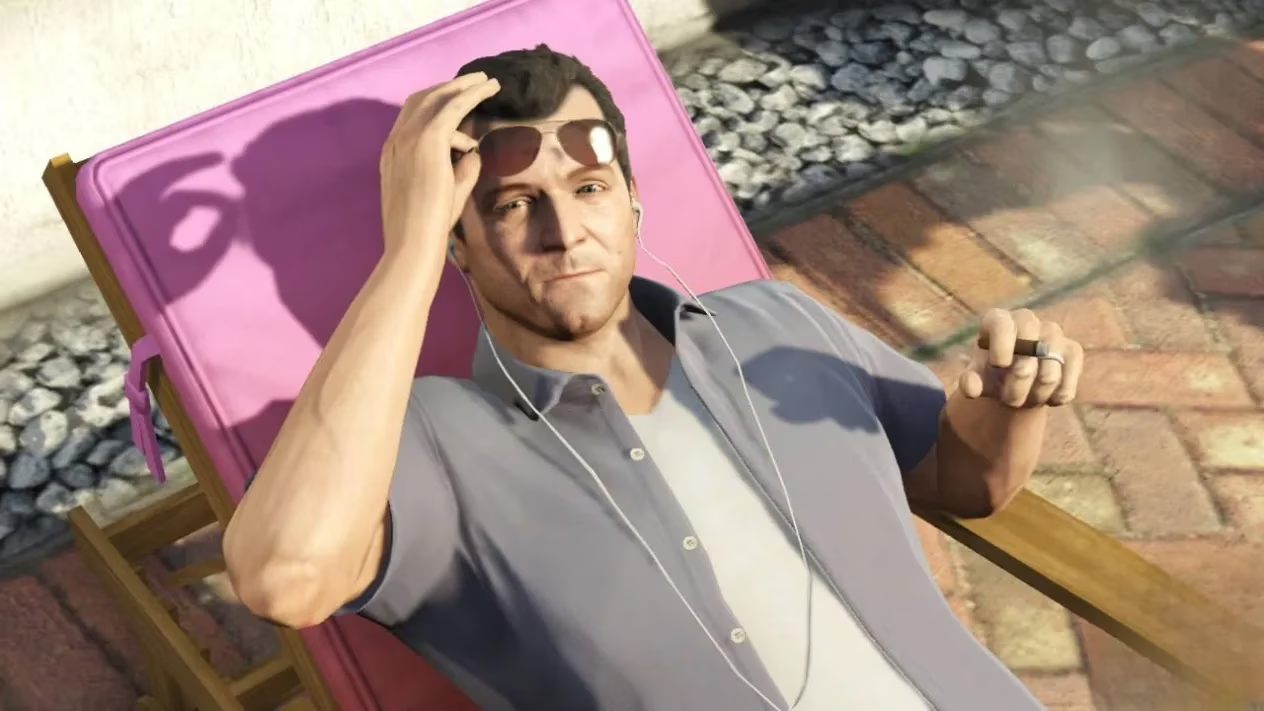
The travelogue offered more than scenery. It whispered about a lifestyle. Sleek cars cut through palm-lined streets. Healthcare waited for the reckless. Stock market investments tempted gamblers. Air travel hinted at a map too large to cross by road alone. Car customization shops promised identity. Beaches and watersports added salt and speed. Shopping districts turned money into armor, clothes, and status. Suddenly, Los Santos felt like a place where anyone could become someone, or lose everything trying.
Blaine County was the raw, sun-scorched counterpart to Los Santos. Where the city gleamed with glass and neon, the county crumbled with trailer parks, dry riverbeds, and wide silence. The travelogue made that contrast feel intentional. A player could spend a morning investing in the stock market from a city apartment and an afternoon racing dirt bikes through the desert. The map did not simply get bigger; it got sharper. Each region had its own rhythm. Los Santos pulsed with ambition. Blaine County breathed with menace and loneliness.
The Faces of the Coast
In one screenshot, Michael and Franklin leaned over a table covered with heist plans. The tension was quiet, professional, and dangerous. Another frame introduced Trevor’s acquaintance, Nervous Ron. His name said everything. Ron looked like a man who had seen too many desert sunrises and not enough sleep. These images were not filler. They hinted at partnerships that would bend the law and friendships that would creak under pressure. The artwork did more than show the map. It showed the people who would make the map matter.
What the Coast Promised
The travelogue broke down the decadent lifestyle into bright, marketable pieces. But each piece carried a deeper gameplay signal. Here is what visitors could expect.
| 🌴 Feature | 🎮 What It Meant |
|---|---|
| 🚗 Sleek and fast cars | High-speed chases and stylish escapes through city traffic |
| 🏥 Healthcare | A second chance after a bad fall or a gunfight |
| 📈 Stock market investments | A living economy with risk, reward, and consequence |
| ✈️ Air travel | Freedom to cross mountains and urban sprawl |
| 🔧 Car customization shops | Personal expression on four wheels |
| 🏖️ Beaches and watersports | Leisure, adrenaline, and hidden world details |
| 🛍️ Shopping | Clothing, gear, and local flavor that shaped identity |
Rockstar’s interactive travelogue was not a one-time drop. The site promised new information on a regular schedule. That was unusual at the time. Most games arrived with a trailer and a handful of stills. GTA V arrived as a slow, deliberate travel brochure. The screenshots showed gorgeous locales that felt lived in. The artwork revealed narrative threads without spoiling them. Every update added a new reason to care. By the time players finally stepped into Los Santos, the city already felt familiar. That was the power of the travelogue: it turned waiting into exploration.
Marcus closed the travelogue and thought about his own history with Los Santos. In 2026, the game had aged but the fantasy had not. The travelogue had promised periodic updates, and Rockstar delivered them in waves. Each new reveal made the city feel deeper. Players noticed small things: the way light fell on a pier, the hum of traffic in Blaine County, the dust on Trevor’s boots. It seemed that with every update, GTA V was looking better and better. That was the beauty of the archive. It was not just an advertisement. It was a blueprint for a living coast.
In 2026, Marcus saved the archived page to a folder called “West Coast Memories.” He knew that newer games offered bigger maps and more realistic water. But the original Los Santos reveal still held a special magic. It was not just about graphics. It was about the promise of a place that could hold fast cars, fragile economies, violent friendships, and quiet beaches all at once. The travelogue had sold that promise beautifully. And for millions of players, the coast had delivered.