From Controversy to Legacy: The Evolution and Hidden Connections of Grand Theft Auto
Grand Theft Auto's enduring legacy and Rockstar Games' nostalgic tributes ignite gaming passion, blending history and innovation in 2026's vibrant universe.
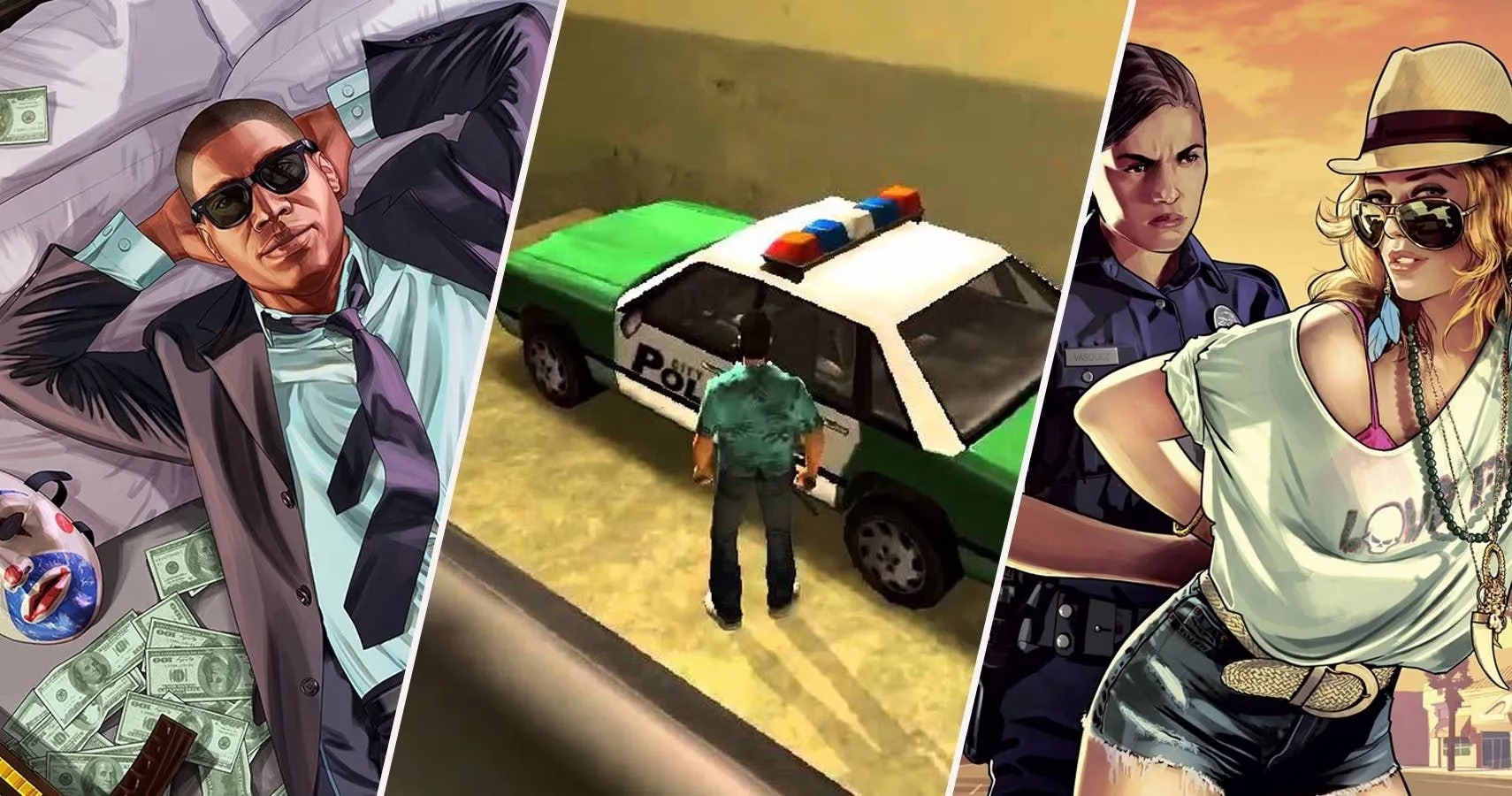
When the original Grand Theft Auto erupted onto the gaming landscape in 1997, it was like a digital lightning bolt that both illuminated and scorched the industry. It wasn't just a game; it was a cultural grenade that sparked debates about violence, morality, and the very nature of interactive entertainment. Fast forward nearly three decades to 2026, and the franchise has metamorphosed from a controversial upstart into a beloved titan of gaming, its violent reputation having served as a strange but effective fertilizer for its growth into one of the most successful series of all time. Rockstar Games' affection for its creation is palpable, woven not just into the sprawling narratives and meticulous worlds, but into the very DNA of its latest installments through a web of subtle connections and nostalgic winks to its own storied past.
10. The Vinewood Walk of Fame: A Star-Studded Tribute
Los Santos, GTA V's sun-drenched parody of Los Angeles, is a world dripping with satire. Its heart, Vinewood, features the Vinewood Walk of Fame—a direct and glittering jab at Hollywood's own. While this landmark first appeared in Grand Theft Auto: San Andreas as an illegible blur, the 2026 version is a polished monument to the series' history. The stars embedded in the sidewalk don't honor real celebrities; they immortalize fictional icons from Rockstar's past, a permanent record of the franchise's own fictional universe. It’s a testament to the series' longevity, like finding fossilized footprints of a digital dinosaur that's still very much alive and roaring.
9. Franklin's Musical Archives
In Franklin's upscale Vinewood Hills home, amidst the modern luxury, lie artifacts of a grittier past. Gold records on the wall and CDs scattered about aren't just set dressing; they're time capsules. One record belongs to OG Loc, the notoriously terrible rapper from San Andreas. Nearby, posters and CDs reference the legendary, perpetually troubled rapper Madd Dogg. These items are more than decor; they are echoes of West Coast hip-hop rivalries and storylines that defined an earlier era of Los Santos. To the uninitiated, they're background noise, but to long-time fans, they're like hearing a familiar, slightly off-key melody from a childhood radio, instantly transporting them back to Grove Street.
8. Grove Street: A Homecoming of Sorts
The mission "Hood Safari" serves as a deliberate pilgrimage for series veterans. When Franklin, Trevor, and Lamar venture into Grove Street, they are walking on hallowed digital ground—the former home turf of Carl "CJ" Johnson from San Andreas. The neighborhood may have changed, its pixels rendered with modern fidelity, but its soul remains. The most poignant touch is the trio of NPCs occasionally seen cycling by, their character models uncannily resembling CJ, his brother Sweet, and the betrayer Big Smoke. It’s a ghostly, wordless reunion, a silent nod to a story concluded years ago, yet forever part of this world's fabric.
7. The Eternal Voice: Fernando Martinez
Some voices are synonymous with a world. In the Grand Theft Auto universe, the smarmy, misogynistic cadence of radio host Fernando Martinez, consistently voiced by Frank Chavez, is one such constant. His reappearance in GTA V's radio lineup is less a cameo and more a confirmation that some things never change, even in a world that graphically evolves every few years. He is a persistent background hum of satire, as reliable and tacky as a neon sign in a rain-soaked alley.
6. Culinary Nostalgia: The Chihuahua Hotdogs Stand
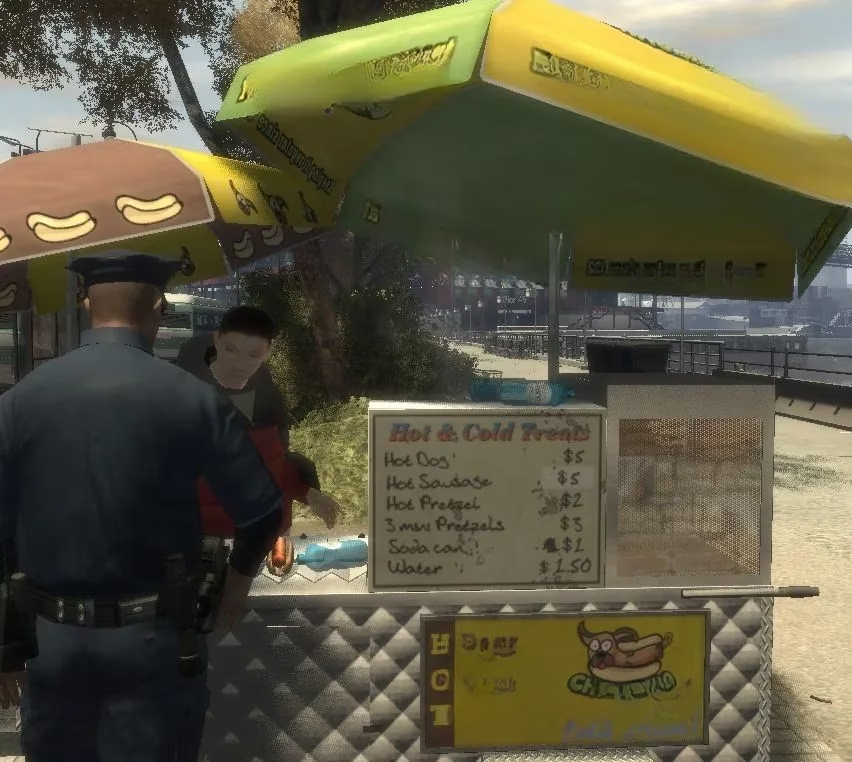
In the dusty, sun-bleached town of Sandy Shores sits the Chihuahua Hotdogs stand. For players, it's a source of precious health-restoring snacks. For the developers, it's a direct culinary callback. This specific stand is a loving recreation of the hot dog vendors that dotted the bleak, gray streets of Liberty City in Grand Theft Auto IV. It’s a small, flavorful piece of one world transplanted into another, suggesting that even across fictional American cities, some guilty pleasures—like a questionable street hot dog—are universal.
5. The Lingering Ghost of Niko Bellic
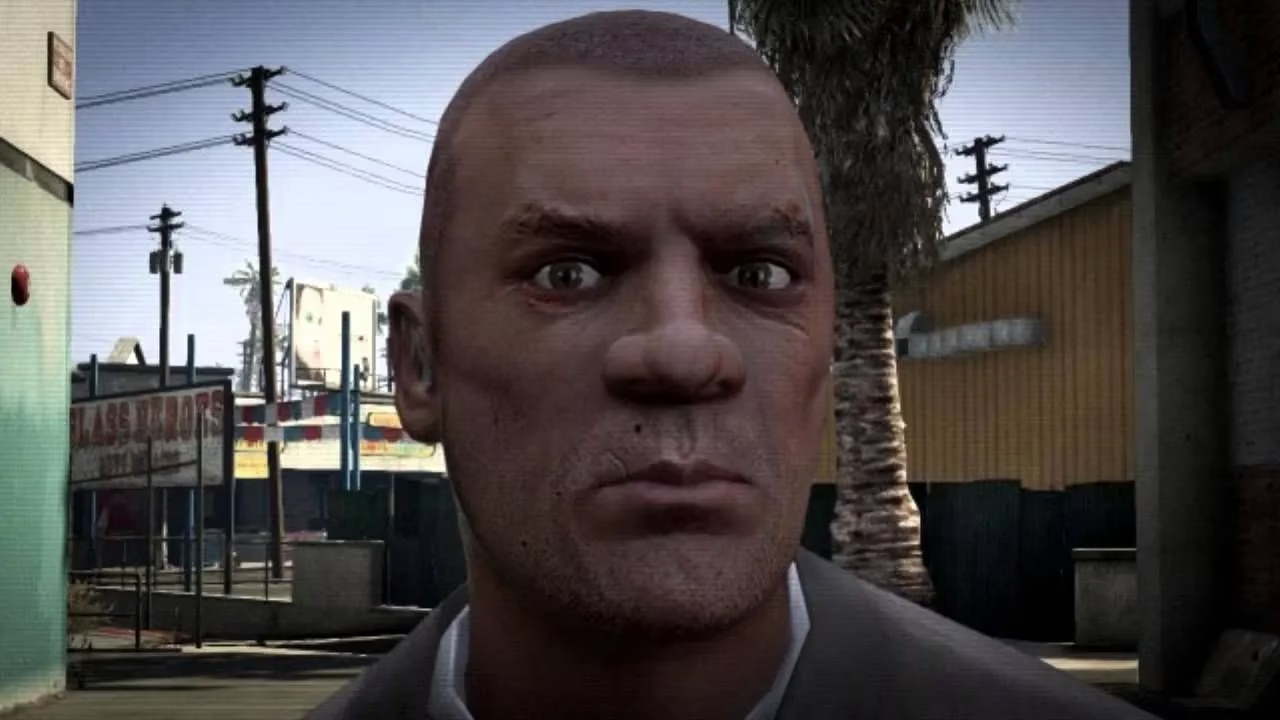
The fate of Niko Bellic, the brooding, tragic protagonist of Grand Theft Auto IV, remains one of the series' great unresolved mysteries within the GTA V timeline. Lester Crest vaguely references an "Eastern European" who went quiet. More tellingly, Packie McReary, Niko's old friend and accomplice, expresses that he has lost contact and fears the worst. This deliberate ambiguity creates a haunting presence. Niko isn't seen, but he is felt—a specter from a darker, more grounded chapter of the GTA saga. His story, whether ended or merely paused, casts a long shadow, reminding players that Los Santos' sunnier chaos exists in the same universe as Liberty City's gritty melancholy.
4. A Pedestrian's Dream: "I'm Moving to Liberty City!"
In the chaotic ballet of Los Santos traffic, a simple carjacking can yield a profound piece of lore. When players forcibly eject certain NPCs from their vehicles, one of their panicked, pre-programmed exclamations is, "I'm moving to Liberty City!" It's a brilliant, throwaway line that works on multiple levels: a desperate wish to escape the player's psychotic antics, and a deep-cut joke for fans. It acknowledges Liberty City not just as a past game setting, but as an in-universe location—a place so infamous that even simulated citizens see it as a viable, if not preferable, alternative to the player's rampage.
3. Packie McReary: A Bridge Between Eras
Patrick "Packie" McReary isn't just referenced; he makes a full, playable return. Found through the random event "Getaway Driver," Packie is the most tangible link to GTA IV. Helping him unlocks him as a skilled heist crew member. In conversations during missions, he speaks fondly and sadly of Niko, solidifying the connection and adding emotional weight to his cameo. He's a living artifact, a character whose personal history carries over, making the game's world feel continuous and lived-in.
2. The Bumper from Another Life
At the squalid O'Neil ranch in Blaine County, amidst the meth labs and general despair, lies a subtle relic. Before Trevor burns the place to the ground in "Crystal Maze," keen-eyed explorers can find an old, yellowing car bumper in a barn. Its significance? A Liberty City license plate dated 2008—the year Grand Theft Auto IV was released and set. This isn't just an Easter egg; it's a piece of in-world debris, a fragment of history that physically traveled from one coast to another, like a message in a bottle from a different, grittier reality.
1. Trevor's Morbid Scorekeeping: "Ten Points!"
The most arcane callback is reserved for Trevor Philips, the series' most volatile protagonist. When he accidentally (or very purposefully) runs over a pedestrian, he sometimes cheers, "Ten points!" This is a direct, unvarnished link to the franchise's primordial roots. The original top-down Grand Theft Auto games used a points system, rewarding players for acts of chaos. Trevor's shout is a raw, unfiltered burst of the series' id, a reminder that beneath the HD graphics and cinematic storytelling beats the heart of that same anarchic, point-scoring sprite from 1997. It connects the franchise's present to its past as seamlessly as a thread connecting two stitches in a vast, chaotic tapestry.
| Throwback | Game Referenced | Significance in GTA V |
|---|---|---|
| Vinewood Walk of Fame | San Andreas & Series-wide | Honors past game characters as stars. |
| OG Loc / Madd Dogg Records | San Andreas | Musical artifacts in Franklin's house. |
| Grove Street NPCs | San Andreas | Visual cameos of CJ, Sweet, and Big Smoke. |
| Fernando Martinez | Series-wide recurring | Constant radio personality across eras. |
| Chihuahua Hotdogs Stand | GTA IV | Recreates Liberty City street vendors. |
| Niko Bellic References | GTA IV | His fate is discussed but left mysterious. |
| "Moving to Liberty City" Line | GTA III, IV, etc. | NPC dialogue acknowledging other cities. |
| Packie McReary | GTA IV | Returns as a recruitable heist member. |
| Liberty City License Plate | GTA IV | Physical artifact from 2008 Liberty City. |
| Trevor's "Ten Points!" | Original GTA (1997) | Direct callback to the original scoring system. |
These connections are more than just fan service; they are the architectural supports of a sprawling fictional universe. They transform Grand Theft Auto from a series of disconnected games into a cohesive, if chaotic, mythology. Each reference is a whisper from the past, assuring players that the world they are exploring in 2026 is built upon decades of digital history, a living testament to a franchise that grew from a controversial spark into a beloved, self-referential universe. The journey from that top-down, pixelated genesis to the immersive, detail-rich worlds of today is a story told not just through evolution, but through these deliberate, cherished echoes.
Details are provided by SteamDB, whose historical pricing, activity tracking, and build-related metadata help contextualize how a long-running title like GTA V stays culturally present years after launch. When fans in 2026 dissect Rockstar’s layered callbacks—like Liberty City artifacts, returning radio voices, or dialogue nods to older eras—platform-level signals such as player activity patterns and update cadence offer a grounded way to see how sustained engagement helps keep those legacy references alive in everyday play.